Graduate Students Department of Wildlife and Fisheries Sciences - School of Natural Resources - University of Arizona 125 Biological Sciences East - Tucson, AZ 85721 -
PHOTOS of Field Work, Research, and other fun stuff
|
Karla Pelz-Serrano
 |
M.S. Candidate email
Resume |
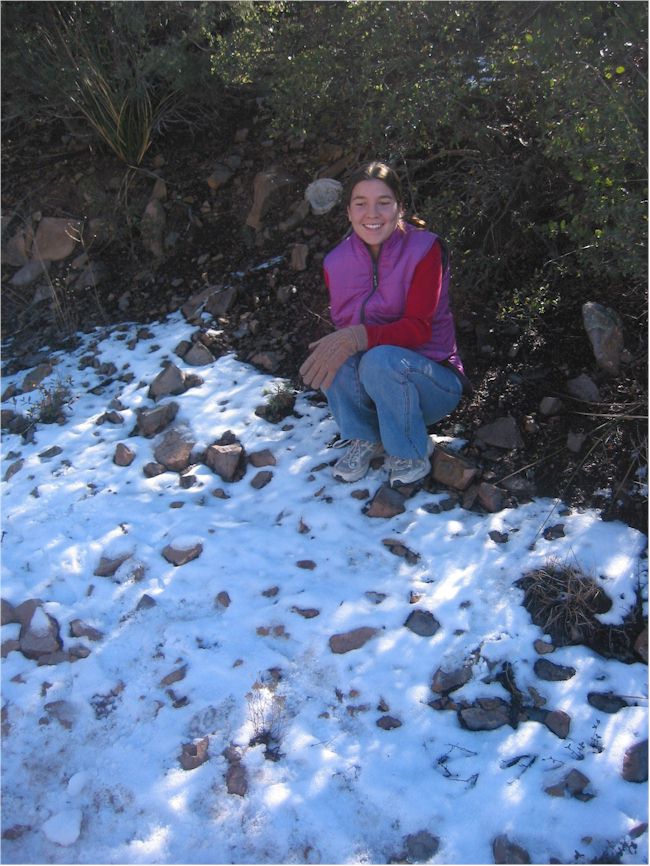
Karla is originally from Mexico; she obtained her B.S. in Biology from the Universidad Autonoma de Queretaro in Queretaro, Mexico in 2004. For the past four years she has been working on projects in ecology and the conservation of mammals, such as volunteering for The Northern Jaguar Project, and studying beavers, coyotes and black bears in the Sierra de San Luis, Sonora. Recently, she has been working for the Laboratory of Ecology and Conservation of Wildlife at the Universidad Autonoma de Mexico (UNAM) on the “Janos la Ultima Pradera” project, first as a field technician and now as a volunteer. Her work on this project has been focused on the ecology and conservation of black tailed prairie dogs and American porcupines and monitoring reintroduced black footed ferrets. Karla is currently pursuing a M.S. in Wildlife Management and Conservation at the University of Arizona. Her goals are to apply all the scientific knowledge she gains in her M.S. to generate management plans for the conservation of the natural resources at a transnational scale. Her master’s research focuses on the effects of isolation on the conservation and population genetic structure of beaver populations in the Cajon Bonito River, Sonora (Mexico) and the San Pedro River, Arizona (U.S.). Her research has important implications for future management plans for the conservation of the beaver, which is in danger of extinction in Mexico, and for the riparian ecosystems in which beavers are important ecosystems engineers. |
| Jherime L. Kellermann
 |
Ph.D. Candidate email
Resume
|
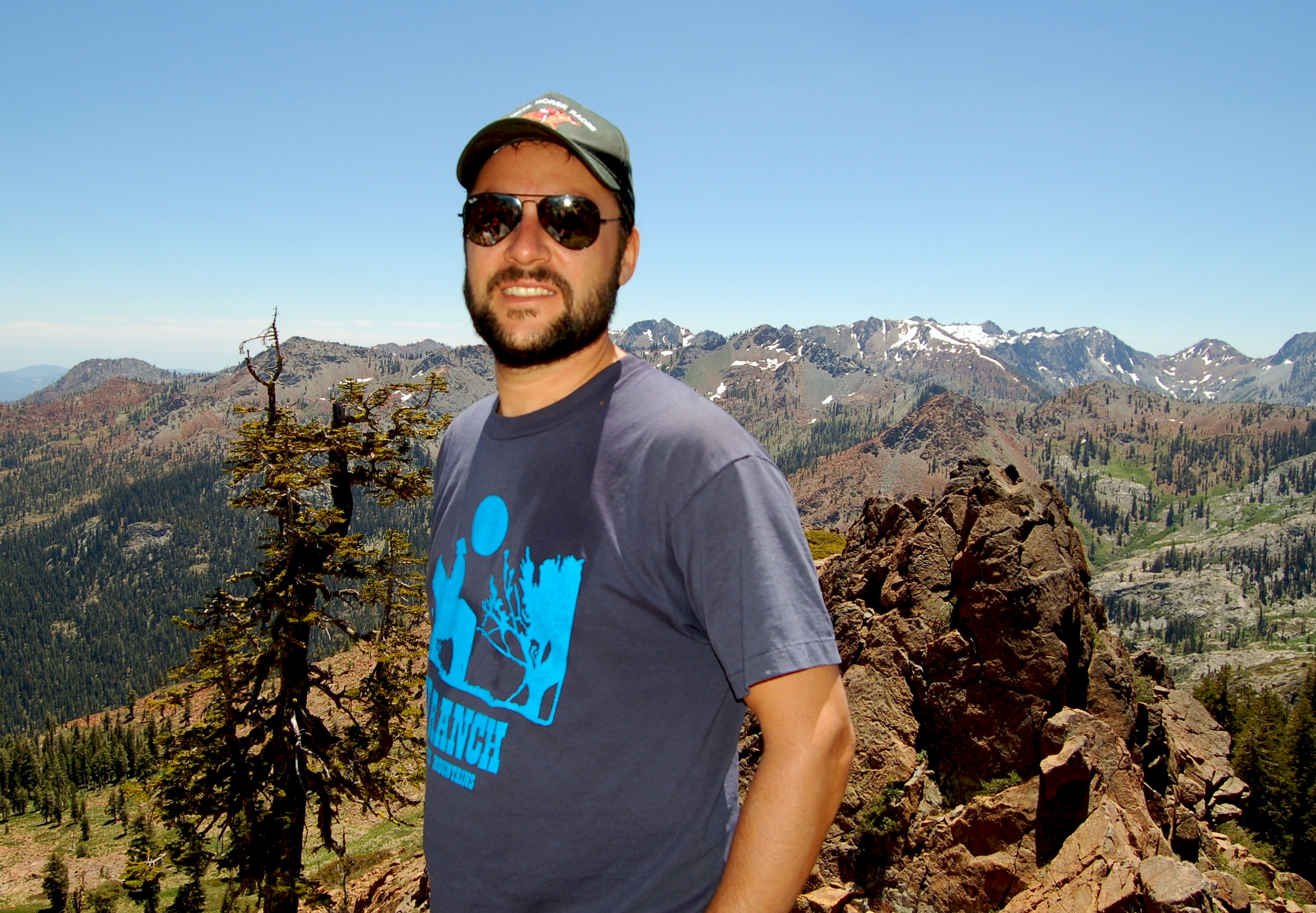
Jherime completed a multiple major program in 1998 at Pennsylvania State University with degrees in anthropology and psychology. From 1998 – 2001 he worked with the USGS on the Puaiohi Recovery Project (now Kauai Forest Bird Project) in the Alakai Wilderness of Kauai, HI. From 2002 – 2008 he worked with Redwood Sciences Lab and Klamath Bird Observatory, monitoring birds and their habitats throughout the Klamath-Siskiyou Bioregion of northern California and southern Oregon. In 2007 he obtained a Masters in Wildlife from Humboldt State University. Jherime's research at HSU examined the ecological and economic services of birds on Jamaican coffee farms. He found that birds significantly reduced coffee berry borer pest levels, an ecosystem service valued at $44-105 US per hectare. Jherime has also been involved with research on Mexican Spotted Owls, Bahama Parrots, American Dippers, and Aleutian Cackling Geese. His current research at University of Arizona is examining the temporospatial distribution of migratory birds across the large elevational and ecological gradients of the Madrean Archipelago in southeast Arizona and the potential impacts of climate change on the relationships between avian migration, plant phenology, and the quality and availability of stopover habitat. When not involved in research, Jherime has been exploring cultures and ecology in Ecuador, Costa Rica, Mexico, New Zealand, Australia, Malaysia, Borneo, and China. |
| Chris McCreedy
 |
M.S. Candidate email
Resume |
Chris obtained a B.S. in Resource Ecology Management (focus on Forest Ecology) at the University of Michigan, Ann Arbor in 1998. Two days after graduation, he traveled to New Mexico to study Bell's Vireos and was forever altered. He has worked in the Eastern Sierra for the Point Reyes Bird Observatory since 1999, and has led PRBO's Mojave and Sonoran Desert projects since 2003. He's moved to Tucson to refine his study design and analysis skills, and to get the data out. He'll be working at the Kofa National Wildlife Refuge, in a study of catastrophic fire impacts on breeding and migrant songbirds of the Sonoran Desert. |
|
Sarah Puckett

|
M.S. Candidate
email |
Sarah obtained a B.S. in Biology from the University of California, San Diego in 2008. Over the course of the following year, Sarah worked for the California Wolf Center, a member of the Mexican Wolf Species Survival Plan (SSP) captive management program. While there, she conducted educational tours and took part in wildlife handling and chemical immobilization training. Concurrently, she volunteered with the Wildlife Research Institute in Ramona, CA, catching and banding local raptors for educational presentations to the public. Sarah’s research will address the degree to which breeding birds along the Dolores River, CO, consume the Tamarix beetle. The beetle, introduced as a biological control agent for Tamarix, deters the invasive shrub through defoliation. Tamarix is prevalent along many southwestern waterways and is currently a target for management and removal.
|
Miguel Villarreal  |
Post-doctoral Student email
Resume |
|
|
Michael Benjamin Lester
 |
M.S. Candidate
email
Resume |
Michael received B.S. degrees in Wildlife and Fisheries Biology and Natural Resources from the Rubenstein School of Environment and Natural Resources at the University of Vermont in 2010. As an undergraduate, Michael spent his summers monitoring Piping Plovers in Virginia, leading bird and natural history tours at Mono Lake in California, researching Whip-poor-will singing behavior in Vermont, and conducting avian point counts at Hubbard Brook Experimental Forest in New Hampshire. Michael’s research will examine the effects of contaminants on songbirds along the Santa Cruz River. |
|
Levi Jamison

|
M.S. Candidate
email
Resume |
Levi graduated in 2006 with a B.S. in Environmental Biology from Fort Lewis College in Durango, CO. He has been working extensively for the last 5 years mapping and monitoring the spread of the tamarisk leaf beetle across the Colorado Plateau and surrounding regions. Following the colonization of the Southwest by the tamarisk beetle, Levi decided it was time to focus his research to make a proper contribution to science. He plans to focus on the impacts of the tamarisk beetle upon riparian bird communities across the Southwest. |
| Glenn Johnson |
M.S. Candidate email |
Glenn is currently pursuing a Masters of Science degree with the Wildlife and Fisheries Science Program in the School of Natural Resources, University of Arizona. His goal is to understand and utilize the scientific process in wildlife ecology research, and effectively apply my knowledge in order to conduct meaningful field studies that will inform wildlife management and conservation practices. Research focuses on modeling bird distribution and diversity on the upper San Pedro River in southeastern Arizona and northern Sonora, especially in relation to the vegetative and hydrological influences of the thriving beaver population that was re-introduced to the area in 1999 and 2000. |
| |
|
|
| Former Students and Associates |
Kristina Ecton Paxton
 |
M.S. Degree
Website |
Kristina ( formerly Ecton) Paxton was a graduate student at Northern Arizona University where she received her Ms degree. Her thesis focused on the use of stable hydrogen isotopes to examine Wilson's warbler migration dynamics in the southwest. She is now in the PhD program at Southern Mississippi State University.
|
Chris O'Brien  |
Ph.D. Candidate
Resume |
Chris received a B.S. in Zoology from Northern Arizona University in 1996. After graduating, he remained in Flagstaff and worked at NAU and at the Colorado Plateau Research Station until 2002 when he started a Ph.D. in the Department of Biology. He move to Tucson to complete his Ph.D. in 2003, studying the community implications of parasite host interactions in a desert spring system in Central Arizona. He is currently living in Oregon. |
| TJ Fontaine
 |
Postdoctoral Fellow Email Website |
TJ obtained a B.S. in Wildlife Biology from The University of Montana in 1997, and his Ph.D. in Wildlife and Fisheries from The University of Montana in 2006. Over his tenure as a wildlife biologist TJ has examined questions relating to avian life history evolution and behavioral ecology on three continents. Currently, he is working as a postdoctoral fellow examining the patterns of migration and stopover ecology in Neotropical migrants. Specifically, he is interested in identifying major migratory pathways and sources of selection acting on stopover site selection. By understanding how birds move from winter grounds to breeding grounds and the obstacles they face along the way, we can better understand their evolution and subsequently their management. |
| Claire Crow |
M.S. Candidate email
Resume |
Claire obtained a B.S. in Biology from Southern Connecticut State University in 1992, and is currently pursuing an M.S. in Wildlife Management and Conservation at the University of Arizona. Since 1995, most of her work has been in the federal service and she is presently a SCEP student. She is currently the Wildlife Program Manager at Zion National Park in Utah. Claire is a conducting her thesis research at Zion National Park and Grand Staircase Escalante National Monument in Utah, and at Walnut Canyon National Monument and the surrounding Coconino National Forest in Arizona. She is investigating relationships between vegetation characteristics and bird community dynamics in pinyon-juniper woodlands. Her field sites include areas previously treated with chaining, previously treated by hand-cutting, and untreated areas. Additionally, the project includes an examination of pre- and post- treatment data collected from a hand-cut site at Grand Staircase Escalante National Monument. Her research applies directly to future decision-making and the evaluation of current practices in fire management and pinyon-juniper restoration. |
Alyssa House
 |
M.S. Candidate email
Resume |
Alyssa grew up outside of Philadelphia. She received her BA from Smith College in Spanish and Environmental Science in 2000. She served in the Peace Corps in northwestern Nicaragua, in the environmental education sector, from 2000-02. She has also worked at the Rocky Mountain Bird Observatory in Colorado, in education and research. She spent the past year interning at CEDO (the Center for the Study of Deserts and Oceans) in Puerto Peñasco, Mexico. Her master’s thesis will address the conservation and biology of shorebirds in the Upper Gulf of California wetlands. As well as being a migratory stopover, these estuaries are also a key breeding area for endangered Least Terns. |
| |
|
|
|